Healthy foods during the holiday

Dec 09, 2024

Tis the Season

Tips for Navigating the Holidays with Diabetic Friendly Choices

As leaves fall and the air turns cooler, we know the holidays are fast approaching. In my house Christmas cheer has already begun as we put out our holiday village.

All the special treats and extra gatherings shared with loved ones may make eating during the holiday season a bit tricky while having diabetes. Remember the importance of striving towards feeling our best and keeping blood sugar under control throughout the holiday season. Keep healthy goals in mind and make the holidays more with respect to being with the ones we care about and enjoying the season overall versus focusing only on the food. There is so much to enjoy over the holidays and keeping diabetes controlled can be easier than you may think.

Some suggestions for navigating the holidays:

•    Avoid skipping meals or snacks before holiday gatherings, this may sabotage your goals.
•    Choose the foods you have looked forward to and enjoy them mindfully.
•    If you want more than one serving, consider portion size and take the second serving to go.
•    Enjoying more movement on days you are eating holiday favorites, such as a morning or evening walk.
•    Take time for yourself during the busyness of the holidays. Read a book, craft, listen to holiday music, or take a drive and look at holiday displays.
•    Be kind to yourself; do not judge or feel guilt when wanting things that taste good.
•    Test blood sugar often so you are aware of how the holidays are affecting your blood sugars.

Diabetes Plate Method
Use the Diabetes Plate Method to navigate your meal and keep carbohydrate portions in check while still enjoying them. Divide your plate into 3 sections, ½ the plate for non-starchy vegetables such as green beans, carrots, broccoli, and salad. The rest of the plate is divided into quarters. Fill one quarter with lean meats such as turkey or ham. The other quarter is for carbohydrate rich foods such as potatoes, stuffing, and cranberry sauce.

Remember what your personal blood sugar goals are. Continue to take medications as prescribed.
Try to remake a family favorite recipe or dish as a diabetes friendly version.

Replace one starchy food choice with a non-starchy vegetable on your holiday table.

Stay Moving...
Remember to include physical activities during the holidays with family and special friends. Physical activity does not only have to be going to the gym or exercising, being active can include many ideas. Going to a park or holiday display in your town and walking around or attend an outdoor Holiday Market. Look for activities and find events in your area to get out and about. There is also usually a Holiday Turkey Trot race or walk in many towns, sign up! Consider taking a family walk after a holiday meal, throwing the ball in the yard with children and grandchildren, a WII dance off, or playing active board games such as PICTIONARY. Memories are made through many moments.

Follow this link for more ideas and a step-by-step guide to managing your holidays.
https://diabetesfoodhub.org/blog/your-diabetes-friendly-holiday-toolkit


Read More
food

Nov 25, 2024

A Sampling Of Holiday Cheer

Some of Paula's Favorites

It’s no secret that one of the most recognizable faces in the Joplin region, Freeman Health System President and Chief Executive Officer Paula Baker, is a natural cook. She finds the activity relaxing, often drawing recipes from her private collection of 300-plus cookbooks. With the holidays approaching, Paula Baker has taken time from her busy schedule to publicize some of her favorite holiday recipes.
She hopes you enjoy them!

Happy Holidays!

Pumpkin Bread
5 eggs
1 1/4 cup vegetable oil
1 can (15 oz.) solid-pack pumpkin
2 cups flour
2 cups sugar
2 pkg. (3 oz. each) cook and serve vanilla pudding mix
1 teaspoon baking soda
1 teaspoon ground cinnamon
1/2 teaspoon salt

In a mixing bowl, beat the eggs. Add oil and pumpkin, beat until smooth. Combine remaining ingredients; gradually beat into pumpkin mixture. Pour batter into 5 greased 5x 1/2x2 inch loaf pans. Bake at 325 for 50-55 minutes or until a toothpick inserted near the center comes out clean. Cool in pans 10 minutes before removing to baking racks to cool completely. May also be baked in 2 greased 8x4x2 inch loaf pans for 75-80 minutes.

Baked Santa Fe Dip
1 8.75 oz. can whole kernel corn, drained
2 cups shredded cheddar cheese (8 oz.)
1 cup shredded M-J cheese (4 oz.)
1 4-oz. can diced green chili peppers, drained 
1/2 cup mayonnaise
2 teaspoons finely chopped canned chipotle chili pepper in adobo sauce
1/4 teaspoon garlic powder
1/2 cup chopped, seeded tomato (1 small)
1/4 sliced green onions (2) 
Tortilla chips and/or vegetable dippers

Preheat oven to 350. In a large bowl, stir together corn, cheddar cheese, M-J cheese, green chili peppers, mayonnaise, chipotle pepper and garlic powder. Spread mixture in an ungreased 9-inch pie plate. Bake, uncovered, about 25 minutes or until heated through. Meanwhile, in a small bowl, combine tomato and green onion. Sprinkle tomato mixture over baked cheese mixture. Serve with chips and/or vegetables. Yields 14 servings.

Peanut Butter Cake
2 cups flour
2 cups sugar
1 teaspoon baking soda
1/2 teaspoon salt
1 cup water
3/4 cup butter
1/2 cup peanut butter
1/4 cup canola oil
2 eggs
1/2 cup buttermilk
1 teaspoon vanilla
  
Preheat oven to 350. Grease a 15x1x1 in baking pan. In large bowl, whisk flour, sugar, baking soda and salt. In a small saucepan, combine water and butter; bring just to a boil. Stir in peanut butter and oil until blended. Stir into flour mixture. In a small bowl, whisk eggs, buttermilk and vanilla until blended; add to flour mixture, whisking constantly. Transfer to prepared pan. Bake 20-25 minutes or until a toothpick inserted in center comes out clean.

FROSTING
1/2 cup peanut butter
1/2 cup butter
4 teaspoons water
2 teaspoons vanilla
2 cups powdered sugar
Mix well and frost cooled cake

GLAZE OPTION
1/2 cup butter
1/4 cup creamy peanut butter
1/3 cup + 1 tablespoon milk
16 oz. powdered sugar
1 teaspoon vanilla   
Combine first 3 ingredients over medium heat. Bring to a boil. Remove from heat and stir in powdered sugar and vanilla, mixing until spreading consistency. Spread over warm milk.

Christmas Punch 
4 cups cranberry juice
2 cups pineapple juice
3 quarts Ginger ale, cold
1 tablespoon almond flavoring
1/2 cup sugar
1 teaspoon red food coloring (optional)
Combine all ingredients. Stir until sugar is dissolved and thoroughly mixed.

The Best Chicken and Dumplings
3/4 cup flour, divided
1/2 teaspoon salt
1/2 teaspoon ground pepper
1 broiler/fryer chicken (about 3 pounds) cut up
2 tablespoons canola oil
1 large onion, chopped
2 medium carrots, chopped
2 celery ribs, chopped
3 garlic cloves, minced
6 cups chicken stock
1/2 cup white wine or apple cider
2 teaspoons sugar
2 bay leaves
5 whole peppercorns 
DUMPLINGS
1 1/3 cup flour
2 teaspoons baking powder
3/4 teaspoon salt
2/3 cup 2% milk
1 tablespoon butter, melted
SOUP
1/2 cup heavy whipping cream
1 teaspoon minced fresh parsley
1 teaspoon minced fresh thyme
Additional salt and pepper to taste 

In a shallow bowl, mix 1/2 cup flour, salt and pepper. Add chicken, 1 piece at a time, and toss to coat; shake off excess. In a 6-quarrt stockpot, heat oil over medium-high heat. Brown chicken in batches on all sides; remove from pan. Add onion, carrots and celery to same pan; cook and stir 6-8 minutes or until onion is tender. Add garlic; cook and stir 1 minute longer. Stir in 1/4 cup flour until blended. Gradually add stock, stirring constantly. Stir in wine, sugar, bay leaves and peppercorns. Return chicken to pan; bring to a boil. Reduce heat; simmer, covered, 20-25 minutes or until chicken juices run clear. For dumplings, in a bowl, whisk flour, baking powder and salt. In another bowl, whisk milk and melted butter until blended. Add to flour mixture; stir just until moistened (do not overmix). Drop by rounded tablespoonfuls into a parchment-lined sheet; set aside. Remove chicken from stockpot; cool slightly. Discard bay leaves and skim fat from soup. Remove skin and bones from chicken and discard. Using 2 forks, coarsely shred meat into 1 to 1 1/2-inch pieces; return to soup. Cook, covered, on high until mixture reaches a simmer.  Drop dumplings on top of simmering soup, a few at a time. Reduce heat to low; cook, covered, 15-18 minutes or until a toothpick inserted in center of dumplings comes out clean (do not lift cover while simmering). Gently stir in cream, parsley and thyme. Season with additional salt and pepper to taste. 
 

Read More
Holiday Traditions

Nov 19, 2024

Some of our Favorite Holiday Foods!

Here's a look at some of our Holiday favorites

The holiday season is a time for families to come together for fellowship, togetherness and the traditional “breaking bread.” 

Perhaps the two most popular times of the year where bread is broken (and broken again, and again) is Thanksgiving and Christmas Day. While the hugs and kisses go a long way, it’s the food that brings everyone together at a single table beneath a single roof. Perhaps the Italians said it best when they coined the phrase – “You can’t live a full life on an empty stomach.”

More times than not, during these two celebrated days of feasting, there is a favored dish that sparks more than a few warm memories from way back when.  

With these “warm memories” in mind, we recently asked a handful of Freeman Health System employees about their favorite holiday dishes and the precious memories tied to them. 
Below are their answers. 

Happy holidays, everyone! 

Kris Drake, Wellness Coordinator: “Our family has enjoyed wild rice casserole on Thanksgiving for as long as I can remember. The night before Thanksgiving, my parents, daughter, brother, sister-in-law, nieces and nephews would gather to make homemade pies and prep the casserole. What made it taste so special was having a chance to visit with family as we chopped the celery and green peppers as well as onions that went into the casserole and to reminisce of years gone by.”

Sarah Horine, Director of Public Relations: “I love stuffing! Mostly this is my favorite holiday food due to the feelings associated with indulgence. I have decidedly different versions of stuffing nestled in my core memory rotation. Each variation being offered by my grandmothers and my aunt; all three wonderful cooks I have been blessed to know over the course of my life. Although different in presentation, texture and taste, each version welcomes feelings of family, togetherness, comfort, laughter and love. 

“One version, in particular, is my favorite due to the significance of the recipe and experience associated with passing down the tradition of providing this small portion of nostalgia to our family. I spent three years living in West Texas. This was our first time away from family during the holidays. I wanted to provide my small family of three with the continued tradition and care provided through holiday meals. My preparation was simply to call my grandmother to get recipes! She shared her version of her stuffing recipe, meaning I received directions such as, “a bit,” “some,” and other vague ingredient measurements. I treasure, and can still hear, our laughter, and my grandmother’s occasional annoyance, during that conversation. My family was afforded the experience of tradition during that first, West Texas holiday meal. 

My grandmother has since passed away. I now have the honor of bringing “Grandma’s Stuffing” as I just so happen to be the only family member who ever received her recipe. Each year as I prepare the bread, I can vividly remember walking into her home to see trays of bread out drying during the lead up to a holiday dinner. I am taken back to her home when I smell the spices, now measured by heart, used to season the dish. When we serve the meal, I am honored when our loved ones express how it “tastes just like Grandma’s” with a sentimental smile. 

“Stuffing invades my senses and emotions, while reminding me of the tradition passed down to me: familial commitment of care for our loved ones.”

Lisa Nelson, Pink Door Boutique Coordinator: “It's a toss-up between sweet potato casserole and dressing. Sweet potato is like having dessert first and it's okay! Throw on some whipped topping later and it gets even better! My Mom could make the best dressing ever! My Dad always loved it on the dryer side, and then cover it with gravy, so I have always loved the corner or end pieces so it would be just a little bit crispy. Gets even better rewarmed. It makes me miss my Mom so much!  Good news is...my dear mother-in-law makes great dressing as well!!!”  

Brandy Miller-Turner, Development Office and CMN Manager: “Whenever I think of Christmas, the things that make me smile always begin with the memories of sweet enticing aromas, coming from a warm kitchen. 
“I had a grandmother who was a master at making Christmas candy and the very best Christmas cookies. We would fill the entire length of her massive kitchen with many varieties of candies, fudge and cookies to share with family and friends over the holidays. 

“My favorite treat to make is Magic Cookie Bars, also known as Seven Layer Bars. They are full of rich chocolate, crunchy graham cracker crumbs and flaked coconut along with sweetened condensed milk. I always love to dress my Magic Cookie Bars up for the holidays by adding some red and green M&Ms. This is such a fun way to give them a bit of color and added texture. Magic Cookie Bars include something for everyone and that’s part of the appeal along with being super easy to make!” 

Danae Taylor: Volunteer Services and Gift Shop Manager: “One of my favorite holiday foods is my Grandma’s chicken and noodles. After a grandma has passed, her recipes often become even more special, taking on a whole new depth of meaning. This recipe allows us to reconnect us to her memory and reminisce on the days of old through the familiar smells and rituals of her preparing the dish. When cooking her chicken and noodles, it brings back memories of her laughter and the warmth of my childhood home. Grandma’s recipes are just another way to keep her legacy alive.”


Read More
Woman with breast cancer

Oct 07, 2024

Returning To Work After Breast Cancer – Creating A New Normal

Treatments are over and now it's time to return to work

The breast cancer treatments are over and now it’s time to return to work. Life after breast cancer means returning to some familiar things and also making some new choices. After a marathon of breast cancer diagnosis and treatment that may last six months to a year, women are eager to get back to a normal life again, and that often includes getting back to work. Transitioning from breast cancer treatment patient to breast cancer survivor is embracing the “new woman” and entering into the “new normal.”

Returning to work post-treatment can be an emotional experience for many women who often feel conflicted between wanting to go on with life and being able to cope with the daily pressures. On one hand, women look forward to returning to a work routine and on the other hand, they dread it. Adding to the awkwardness are the after-effects of treatment such as fatigue resulting from chemotherapy and/or the accumulated effects of other treatments as well as a phenomenon some people call “chemobrain” – mental changes such as memory deficits and the inability to focus.

Adding to the frustrating mix, co-workers tell survivors how they look and ask questions about treatment. How open women are with their co-workers about their breast cancer and health after treatment is a personal decision. Some co-workers will be understanding and offer help while others may be uncomfortable discussing it or resent that they had to take on extra duties on days when the person was absent. Others may ask intrusive questions about the breast cancer, the person’s health, why they’ve been gone or even avoid them. Based on the relationship with co-workers, women can decide if they want to share anything, what works best for them and their situation, think ahead about how they will handle other people’s reactions and have a plan for what and how much they want to share.

It’s important for women to make sure they’re medically cleared by their health care provider before returning to work. They can also talk with their employer about possible options, like flex-time, job sharing, working from home or other options that may help ease them back into the demands of a job. For some people, the transition to working full-time may be easy, and for others it may take some adjustment.

The benefits of going back to work include helping ladies keep their sense of who they are and how they fit in. It might even boost their self-esteem, not to mention their income. Returning to their job also reminds women that they have a life apart from breast cancer – they are a valued employee, a great boss or a trusted co-worker.

Sometimes breast cancer can make women feel isolated and lonely, and being around people can be a great comfort. Support groups, online chat forums and social media groups offer the chance to air challenges with others that have had breast cancer. This, too, helps with the healing process to speak openly and honestly about the post-surgery struggles.

The good news is, with time, little by little, most women start to feel like their regular selves once medications are completed and the exhaustion subsides. It takes time for the “new you” to settle in. Truly, time heals many wounds and having a job can divert attention away from the stressors of the breast cancer journey and allow women to refocus on other things in life and create their own “new normal.”

About the Author
Lesa Deardorff has worked at Freeman Health System for 37 years and served as director of radiology services for 21 years. She oversees the Freeman Radiology Department, which offers advanced technology and top-of-the-line ultrasound, x-ray, nuclear medicine, CT, PET/CT and mammography services. To learn more, visit freemanhealth.com/services/radiology or call 417.347.6611.
 

Read More
pills

Sep 27, 2024

‘Challenging’ Penicillin Allergies

Allergy challenges are real in everyone's life

If I polled a room today and asked how many individuals were allergic to penicillin or one of its siblings – such as amoxicillin – up to a quarter of those people would raise their hands. You may even be one of them. But have you ever wondered if that was true?

September 28 is National Penicillin Allergy Day, which celebrates the day Alexander Flemming discovered penicillin in 1928. The discovery of penicillin was so significant that it merited a Nobel Prize in 1945, and it’s no exaggeration that penicillin has save millions of lives.

More people report an allergy to penicillin than any other drug – up to 25 percent of the population. However, up to one-third of those individuals are unable to pinpoint their specific reactions, which isn’t surprising, considering as many as 75 percent of those reported reactions happened before they were 3 years old.

Many reported reactions – such as headache, diarrhea or even a family member with penicillin allergy – aren’t even the result of true penicillin allergies. Rash is the most commonly reported reaction, but it can be difficult to differentiate between rashes caused by an allergy or those caused by viruses, which are extremely common in young children.

So what’s the big deal? The solution seems simple: Avoid penicillin and we’ll be fine, right? Not exactly. The antibiotics used in place of penicillin are often less effective than penicillin antibiotics and carry a higher chance of infections such as Clostridium difficile, a serious diarrheal illness that can require hospitalization.

On top of that, the allergy is associated with longer hospital stays as well as drug-resistant bacterial infections such as methicillin resistant Staphylococcus aureus (MRSA) and vancomycin resistant Enterococcus (VRE), which can be difficult to treat.

What allergy  ‘challenges’ reveal

Up to this point in the article, you may have noticed that I use the term “reported allergy” instead of “allergy.” I do this because less than 5 percent of people who report penicillin allergies would truly be allergic if tested.

The American Academy of Allergy, Asthma & Immunology and the American College of Allergy, Asthma & Immunology recommend actively challenging reported penicillin allergies.

These testing “challenges” can range from simply discussing reported reactions to skin pricks– in which a qualified physician injects a small amount of penicillin or one of its derivatives in the top layer of skin and looks for a reaction. Another challenge involves administering a dose of a penicillin to gauge a true reaction. All this testing can be performed safely, in an office setting safely. Less than 4 percent of individuals challenged have had reactions – usually mild ones such as a rash – with no reports of serious reactions, such as anaphylaxis.

Those who experience true reactions to penicillin can benefit from challenging. After five years, up to 50 percent will no longer be allergic to penicillin on testing, and this number increases to 80 percent after 10 years.

Challenging a reported penicillin allergy is well worth it, with some patients reporting savings of nearly $2,000 per person, per year, in healthcare costs.

Ask your physician or healthcare provider about your penicillin allergy and see if you would benefit from a direct challenge or referral to a board certified allergist. Freeman Health System is proud to be the region’s only hospital offering penicillin challenges for low-risk hospitalized patients.

References

Castells M, Khan DA, Phillips EJ. Penicillin allergy. N Engl J Med. 2019;381(24):2338-2351.
National Penicillin Allergy Day. NPAD. Published June 28, 2017. Accessed September 25, 2024. https://nationalpenicillinallergyday.com/

Stone CA Jr, Trubiano J, Coleman DT, Rukasin CRF, Phillips EJ. The challenge of de-labeling penicillin allergy. Allergy. 2020;75(2):273-288.

Macy E, Contreras R. Health care use and serious infection prevalence associated with penicillin “allergy” in hospitalized patients: A cohort study. J Allergy Clin Immunol. 2014;133(3):790-796.

Khan DA, Banerji A, Blumenthal KG, et al. Drug allergy: A 2022 practice parameter update. J Allergy Clin Immunol. 2022;150(6):1333-1393.

Cooper L, Harbour J, Sneddon J, Seaton RA. Safety and efficacy of de-labelling penicillin allergy in adults using direct oral challenge: a systematic review. JAC Antimicrob Resist. 2021;3(1):dlaa123.

Sullivan TJ, Wedner HJ, Shatz GS, Yecies LD, Parker CW. Skin testing to detect penicillin allergy. J Allergy Clin Immunol. 1981;68(3):171-180.

Blanca M, Torres MJ, García JJ, et al. Natural evolution of skin test sensitivity in patients allergic to beta-lactam antibiotics. J Allergy Clin Immunol. 1999;103(5 Pt 1):918-924.


 

Read More
physical

Sep 23, 2024

Want to get in the game?

It's time to get a sports physical exam.

Getting a pre-participation sports physical exam is not just a good idea for student athletes – it’s a requirement. The Missouri High School Activities Association mandates that student athletes get an annual sports physical to compete in junior high or high school sports. Other neighboring states have that same requirement. Pre-participation sports exams are performed either by a student’s personal physician or by another professional medical provider. Exams can be completed at a medical office, designated sports clinic or an athlete’s school.

Medical providers check for several conditions:

•    Conditions that require treatment or a plan prior to sports participation
•    Orthopaedic conditions that need physical therapy or other treatment
•    Asthma, hypertension, anemia, etc.
•    Potentially life-threatening conditions that could occur during any sport
•    History of concussions to determine if student is still experiencing post-concussion symptoms

Parents need to provide the medical staff with the athlete’s medical history, as well as the family’s medical history before the physical exam takes place. After the medical provider has reviewed the student’s and family’s medical history, the physical exam will follow. Based on the family medical history, a student commenting on shortness of breath or heart palpitations during the exam will be referred to a specialist for further testing to pick up on potential heart diseases. Any prescriptions or over-the-counter medications the student is currently taking should be reported during the exam.

The physical exam usually includes:

•    Weight and height measurements
•    Blood pressure screening
•    Heart and lung checks
•    Ear, nose and throat examinations
•    Basic hearing and vision tests
•    Joint movement and muscle strength
•    Spinal alignment and posture

Sports physicals should be completed at least six to eight weeks before the student’s sports season begins. This allows time for additional testing and evaluation, if necessary. Parents have the right to choose which type of sports physical is right for their child. If an athlete has a medical condition or history of injury, the parent may choose the route of a more thorough physical exam through the family’s personal physician.

Although a sports physical exam may identify health problems not associated with physical activity, it should not be used to replace medical care or annual routine checkups with primary care physicians. Students are still encouraged to visit their primary care physician for regular checkups and for any conditions that need further medical treatment.

Pre-participation physical exams can help determine if a particular sport is safe for an individual student. Most students are cleared for sports participation through sports physical exams. Students requiring follow-up with a specialist often resume normal activities after ensuring they are able to safely participate in sports.

School sports play an important role in helping student athletes develop skills and learn values that can be used throughout their entire lives. Providing a sports physical exam is the first step to a season filled with learning, spirit and teamwork.


Robert Lieurance, MD, completed his medical education at the University of Arizona College of Medicine. He is board certified in orthopaedic surgery and fellowship-trained in sports medicine. Dr. Lieurance serves as the official orthopaedic team physician for Missouri Southern State University and Joplin High School.

Read More
Counseling - hands

Sep 29, 2025

Suicide Awareness Month Is In September

Help is Here

Life can have its dark moments. For some, these moments can lead to a crisis, at which time an individual reaches her or his breaking point and suicide may seem like the only escape from the emotional pain.


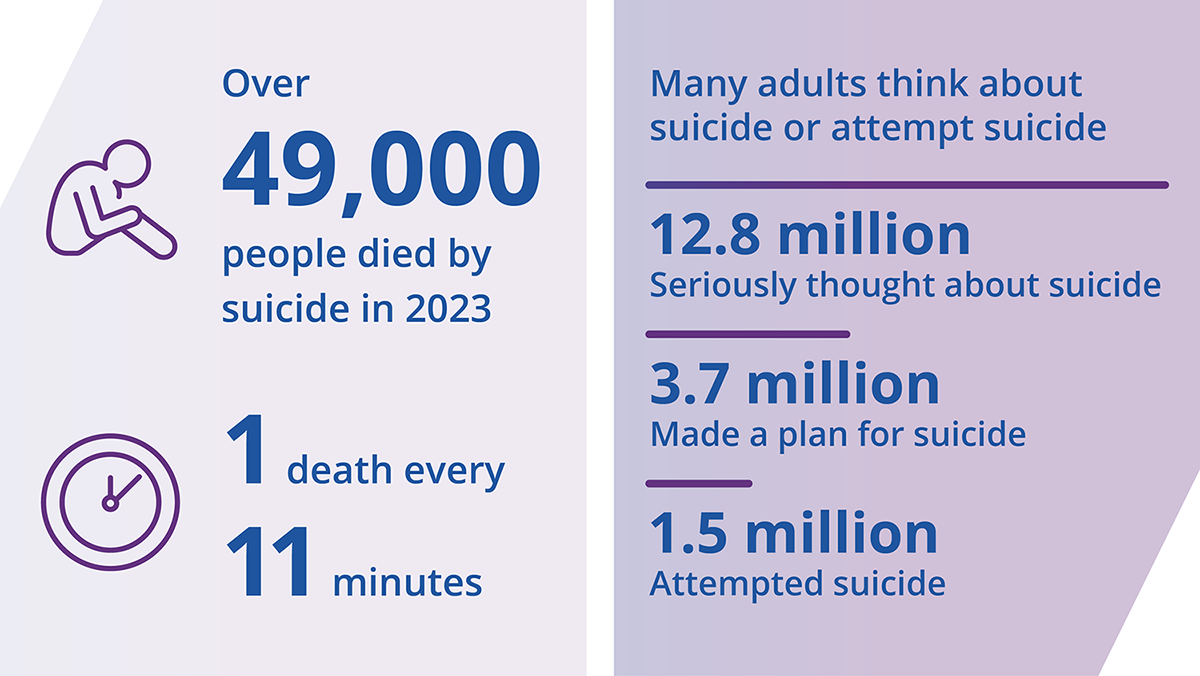
Each year, we lose nearly 50,000 Americans to suicide, or approximately 137 lives a day. Here in Missouri, those numbers are indisputably headed in the wrong direction: We lost 1,219 individuals to suicide in 2022, an average of 19.1 per 1000,000 individuals, which is the 15th-highest mark in the United States. 

That said, suicide is among our most serious public health crises and a leading cause of death in America. The collateral damage is sweeping, with social, emotional and economic consequences. 
However, it’s also the most preventable type of death.

September is National Suicide Prevention Month, and anyone can take action to help prevent suicide. Regardless of how significant our actions may seem, we can provide hope to those who are in crisis and might be contemplating suicide – provided we’re willing to listen and talk openly about those dark moments.

Conversations about emotional well-being can be difficult. However, for a person in despair, simply articulating that fear or sadness to a supportive listener can help him or her share that burden, feel relief and re-grasp hope. So if you notice someone struggling, tell them they’re noticed, because your acknowledgment could save a life. 

On an individual level, there are simple ways we can identify and manage common life stressors in ourselves. The Centers for Disease Control recommends these practices for handling discontent and despair:

- “Breaks” from watching or reading the news
- Healthy eating
- Getting plenty of quality sleep
- Regular exercise
- Taking time to unwind
- Talking to others
- Connecting with community- or faith-based organizations
- Avoiding drugs and alcohol

If your situation isn’t improving, or you’re trying to help someone else through a rough patch, local resources are ready. 

The 988 crisis line Ozark Center – one of 200 nationwide 988 call centers, takes calls 24 hours a day, seven days a week. Regardless if the situation seems life-threatening, any individual in crisis or a concerned other can dial 988 to reach a trained crisis specialist for support. This support includes brief supportive counseling, referrals and education, and there is no charge for seeking help from a 988 professional or at the local crisis center.

People do care, and we can help. 

Debbie Fitzgerald is Director of Crisis Services for Ozark Center, which has been active in suicide prevention for more than 20 years. For more information, call 417.347.7720 or visit ozarkcenter.com.
 

Read More
cori

Jul 02, 2024

Robotic Knee Surgery Done Right

CORI Surgical System® Offers Better Range of Motion, Less Pain

Three Freeman orthopaedic surgeons – Dr. Derek Miller, Dr. Robert Lieurance and Dr. Thomas Sanders – are the first and only physicians in Southwest Missouri to utilize the CORI Surgical System®, a robotic-assisted computerized tool that has proven revolutionary when it comes to partial and total knee replacement surgeries.

Thanks to detailed computer scans and a nimble handheld tool, the system adds an extra layer of pre-surgical planning to surgeries along with improved cutting precision that was almost unheard of 20 years ago.

It all comes down to precision. The robot allows the trio to prepare bone down to an unheard-of tenth of a millimeter, which is an accuracy never seen before; making CORI a true paradigm shift when it comes to knee surgeries.

Prior to surgery, the CORI system eliminates the need for timely and expensive CT scans, x-rays or MRI – deleting exposure to radiation or an additional expense rarely covered by insurance. The system allows Dr. Lieurance, Dr. Sanders and Dr. Miller to map a knee’s anatomy in live time, meaning a more accurate and custom fit for a total knee replacement.

CORI’s other primary benefit is the robotic assistance it offers Freeman surgeons during the actual surgeries. The surgeon is in complete control of the robot at all times, holding a robotic hand piece that replaces the traditional bone saw. CORI tells the surgeon where to manually cut and remove bone, milling down into the bone to a pre-determined setting.

When it comes to partial replacement surgeries, the supporting tissue and ligaments that help stabilize the knee are spared; only the damaged portion of the knee is replaced with a custom-made prosthetic implant. With full knee replacement surgery, the entire knee is replaced with a prosthetic designed to replicate the shape, motion and stability of the replaced knee joint without significant soft-tissue complications.

As a result, all three Freeman surgeons are seeing higher patient satisfaction, better range of motion sooner and the ability to go home more quickly and fewer patients requiring narcotics after surgery. 
 
To learn more about knee surgeries and the CORI surgical system®, visit freemanhealth.com. To schedule an appointment today with any one of our surgeons, call 417.347.5400. 
 

Read More
men's health

Jun 19, 2024

How Men Stay Healthy at Any Age

June is Men’s Health Month

June is Men’s Health Month, a time to offer men awareness of preventable health problems and encourage early detection and treatment for men of all ages. The tendency of some men is to “tough it out” – putting off doctor visits, ignoring symptoms or signs of illness and neglecting their health. "

This kind of procrastination, however, can prove fatal in some situations. Regular checkups, screenings and vaccinations are crucial for men to stay healthy and active, even if they’re feeling good and are symptom-free. Preventative care helps men and their doctors to remain proactive and increase their chances of avoiding health issues, and to effectively treat medical situations before they worsen and become more serious.

As men age, their bodies become more prone to certain diseases and conditions. Cardiovascular disease, for example, is the leading cause of death in men. Men are also more prone to developing symptoms of low testosterone and prostate cancer. Regular wellness checkups will help identify any deficiencies that may be causing other health-related issues, such as erectile dysfunction or high blood pressure. A Freeman primary care doctor can help men develop a personal wellness program to fit their lifestyle and address each aspect of their life – ranging from nutritional guidance and exercise to weight management. 

It's important that men of all ages regularly visit their doctors to screen for the following conditions.

All Ages:
•    Annual wellness exam. A yearly physical with your general practitioner is important for preventive care. Visits may include vaccinations, disease screenings, referrals for blood work, a height and weight evaluation, and potential additional tests for any chronic conditions.
•    Testicular cancer screening: While self-exams should be conducted monthly, the American Cancer Society recommends testicular cancer screenings also be performed at annual wellness visits.
•    Skin cancer screening: Yearly visits to a dermatologist for skin checks are crucial for preventing skin cancer. 
•    Dental exam: A thorough dental exam and cleaning is recommended at least every 6 to 12 months for optimal tooth and gum health.

Age 20 to 39:
•    Blood pressure: Beginning at age 20, men should have their blood pressure checked at least once every two years. 
•    Cholesterol: Beginning at age 20, most men should have their cholesterol checked every four to six years. 

Age 40 to 59:
•    Eye exam: At age 40, men should have a baseline comprehensive eye evaluation even with no signs or risk factors of eye disease. 
•    Blood glucose test: Blood glucose tests are used to screen for diabetes and are recommended for men every three years beginning at age 45. 
•    Colonoscopy: Men who are at an average risk for developing colorectal cancer should have their first colonoscopy at age 45 and then, an additional screening every ten years. 
•    Prostate cancer screening: Beginning at age 50, men should talk to their doctor about beginning regular screenings for prostate cancer. 
•    Shingles vaccine: Men should be vaccinated to prevent shingles at age 50.
•    Lung cancer screening: Men ages 55 to 80 with a history of heavy smoking (more than 30 packs per year) and who actively smoke or have quit within the previous 15 years should have a yearly lung cancer screening, even without symptoms of lung cancer.

Age 60 and up:
•    Pneumonia vaccine: Men over 65 should be vaccinated against pneumonia yearly.
•    Bone-mineral density test: Beginning at age 70, men should have the test at least once and up to as often as every two years depending on risk factors. 
•    Abdominal aortic aneurysm: A one-time screening is recommended for men between the age of 65 to 75 years who have a history of smoking.
•    Yearly eye exam: Men 65 and over with no risk factors should have a comprehensive eye exam every one to two years to screen for cataracts, age-related macular degeneration and glaucoma.
Men can choose June as the month they play a protective role in their health journey. To learn how to conquer new heights to living healthier and enjoy a lifetime of wellness, schedule an appointment with a Freeman Primary Care Physician by calling the Freeman Physician Finder at 417.347.3767 or 800.297.3337 or visit freemanhealth.com.
 

Read More
med bottles

Jul 02, 2024

Keep Track of Your Medications

Preparation Is Key

We hear it all the time:

•    “I have too many medications and don’t want to carry all of them with me.”
•    “I would need a suitcase to carry them all to the doctor’s office.”
•    “I’ve taken all my meds to another doctor who requested them and they were never looked at.”
•    “You can call my pharmacy or my doctor to get the list; I don’t have time to do all that.”

But there’s a very important reason why we encourage all Freeman patients to bring all their medications, vitamins and supplements – in their original bottles – to all doctor visits. While prescription medications can boost health and even save lives, dangerous interactions can occur when a patient has the wrong mix or doesn’t know off the top of their heads what they regularly take on a daily basis.

Drug interactions can be dangerous, particularly when prepping someone for surgery. Heart, carotid and lung surgeries are just a few procedures that can be affected by drug interactions.

If your healthcare professional isn’t aware of every medication a patient takes, from a supplement to a prescription drug, or if a patient shows up with a medication bottle and it hasn’t been presented, there’s the potential that a heart, carotid or lung surgery could be affected by drug interactions and would need to be canceled or postponed.

The dangers are real – some medications, and even vitamins and supplements, can negatively interact with pain medications, anesthesia or prescribed medications, especially if it has a sedative action. Another interaction could take place post-operation, when some medications and supplements may deplete a patient’s body of certain vitamins, in turn increasing risks of infection. Vitamin K can thicken the blood. Ibuprofen/Naproxen may deplete vitamin C levels. It’s for these reasons, and so many more, that accurate medicine lists – with the exact dosage listed on the bottles – is so important. Depending on the amount, we may need to hold different supplements and different vitamins or medications for different lengths of time for patient safety.

Most if not all hospitals use an electronic health record system, which is essentially an electronic version of a patient’s medical history that is continuously updated. What people don’t understand is that just because many utilize electronic medical records, different hospitals and medical groups use different systems. I personally confer daily with electronic medical records from multiple health systems in our area. Many of these systems don’t “talk” to one another, so when a new patient from another hospital comes to Freeman, we still have to send and receive information and everything has to be recorded into their new Freeman chart by hand. As much as we would love for it to happen, information doesn’t simply flow from one electronic chart to a new one in an organized manner. That’s why an up-to-date medication list and medication bottles are so important.

I encourage every patient to be proactive when it comes to their own care and to make sure every single one of their providers knows what medications they are taking. This is such an easy way to decrease possible medication and treatment errors.

Read More
Subscribe to Blog